One Vanilla Farmer Reimagining Community Education in Bali
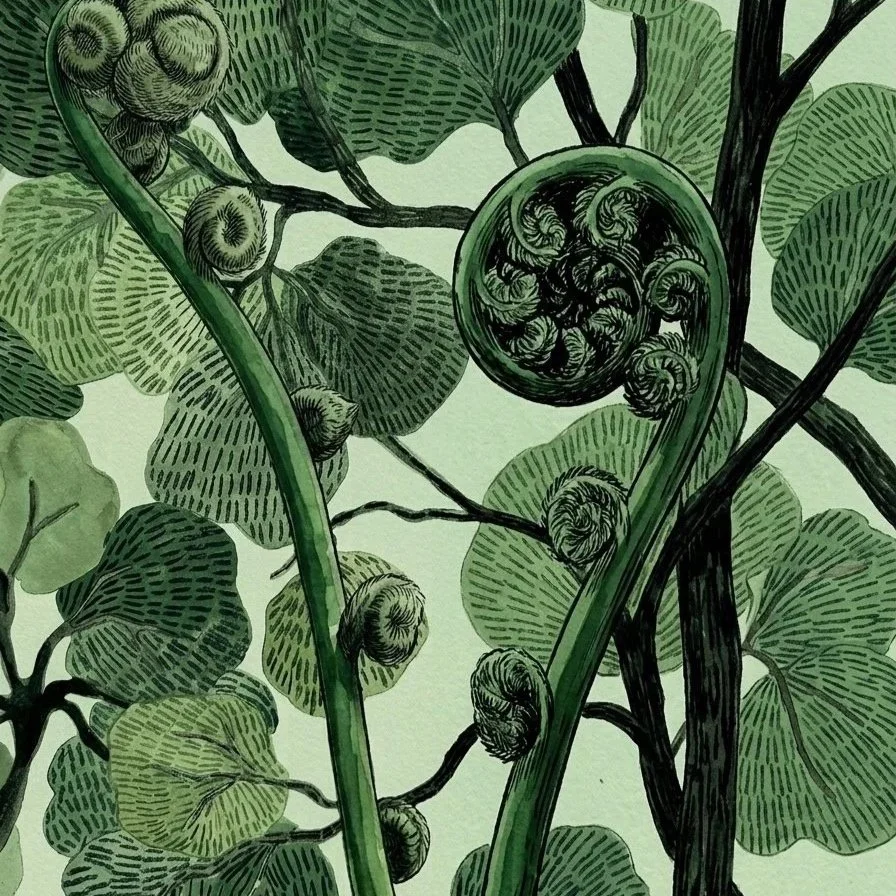
A fiddlehead fern unfurls in Carman’s garden, part of the emerging biodiversity he is nurturing in the soil adjacent to the school.
The Departure and the Hustle
In 2001, Carman left his village in Bali. Like many young men seeking a foothold in the global economy, he joined the crew of a cruise ship. For nearly fifteen years, he lived a life of one-year contracts and three-month returns—a cycle of hard work, long periods away from home, and the pursuit of a stable life.
By 2015, with a second child on the way, the pull of his roots became stronger. He ended his journey at sea and returned to Denpasar. But the transition was not easy. Carman recalls having no idea what he was going to do, wearing the jacket of a Grab driver and working as a taxi driver in the city. He tried his hand at villa management in the bustling hubs of Canggu and Kuta, only to be squeezed out when the larger e-commerce players moved in. Like many others, he found himself caught between the fast-paced machinery of modern tourism and the quiet call of his heritage.
A Season for Learning
Then came 2020. The pandemic silenced the tours and emptied the villas. For an entrepreneur whose livelihood depended on the movement of people, the world stopped. But a conversation with his wife changed everything. He looked at the land his parents had left him and the buildings already standing. He told her then that he needed to contribute to his community and give them what he had been through — his experience and his skill.
Planting the Future
Carman decided to build something with genuine substance. He moved back to his village to focus on two things: vanilla and education. Today, Carman is a vanilla farmer, a role rooted in his childhood. He remembers sleeping under the stars on his parents’ land, learning early on that patience was the most vital tool in a harvest. When the vanilla was finally ready, he would stay close to the vines—a young guardian tasked with protecting the family’s long-awaited harvest. To him, vanilla is more than a crop; it is a point of connection. He prepares the soil and pollinates the flowers by hand, inviting guests from around the world to see the process. He works with deliberate patience, believing that haste or ulterior motives dilute the work. His process is unforced, moving at its own natural pace.
Adjacent to his garden is LPK Fuji Vidya Loka, his community school. Carman recognised that his village was changing. The internet had arrived, and with it, the culture shock of the outside world. He wanted to prepare the local youth, not by isolating them, but by opening their minds. The school helps local students train for three-year programs in Japan where they learn the language and the culture, a door to experience the world that a traditional degree often fails to provide. By creating a space for international volunteers to stay and teach, Carman has created a two-way street of learning. The students learn English and stories from the wider world, while guests learn the genuine, un-uniformed reality of Balinese life.
The Balance of a Perfect Life
On the morning of Galungan—the festival celebrating the victory of good over evil—Carman wakes at 3:00 AM to drive to his family temple. The festival marks when ancestral spirits return to visit their living families, and he moves through streets lined with penjor, the towering bamboo poles that signal a village’s gratitude for the harvest. This balance defines his current chapter: he is as much a modern educator as he is a traditional devotee and skilled gardener.
Beyond the vanilla vines, his land has become a living laboratory of local biodiversity. With the same patience required for hand-pollination, he has successfully cultivated star apples, tamarillos, durian, and giant passion fruit, alongside a variety of vegetables and ornamental plants. For Carman, right livelihood is found in this equilibrium—the ability to provide for his family and community while remaining rooted in the soil. Reflecting on the transition from the hustle of the city to the rhythm of the farm, Carman notes that true stability comes from applying global perspectives to local needs. It is a practical blueprint for a sustainable future: taking the experience of the world and reinvesting it into the village.